The Cognitive Continuum: The Architectural Layers of Artificial Intelligence
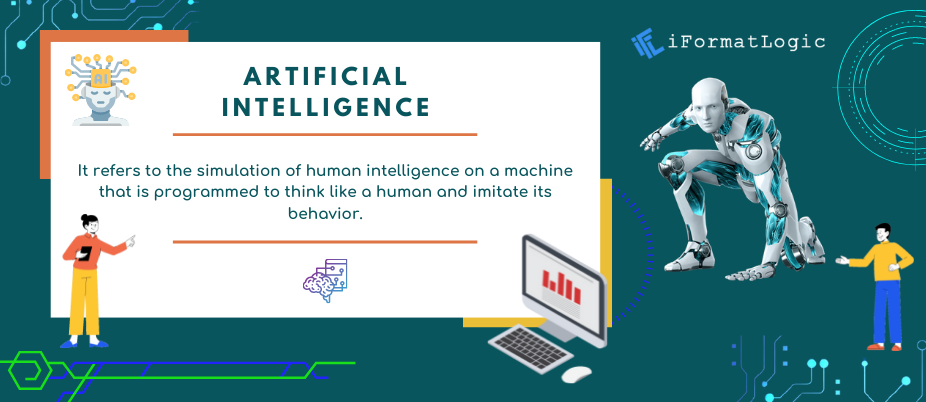
"Artificial Intelligence (AI) simulates human cognitive faculties inside programmatic computing environments, enabling devices to process information, reason logically, adapt to novel data inputs, and autonomously optimize goal-oriented outcomes."
The explosive expansion of information technology has transformed artificial intelligence from an experimental research project into core enterprise operational infrastructure. The primary objective of an AI system is to parse information, identify underlying patterns, and execute data-driven actions without explicit, hard-coded rules. To achieve this, modern systems utilize an interconnected tech stack composed of distinct intelligence tiers, functional processing branches, and high-volume data models.
The Dual Spheres of Application Scope
Weak (Narrow) Intelligence
Systems meticulously engineered to execute a single, isolated functional objective. These applications reference direct user prompts to surface tailored answers within pre-defined parameters.
Examples: Apple Siri, Amazon Alexa, Strategic Chess EnginesStrong (General) Intelligence
Complex, advanced architectures designed to handle multi-faceted cognitive tasks on par with human execution capabilities. These networks handle variable, changing environments and resolve complex friction points without manual developer updates.
Focus: Autonomous Problem-Solving, Dynamic Cross-Domain SynthesisThe Data Processing Stack: ML to Deep Learning
To process data patterns autonomously without human intervention, AI architectures utilize specialized sub-disciplines:
The foundational framework that builds computer programs to automatically scan, analyze, and adapt to incoming data streams over time, improving output accuracy without explicit procedural modifications.
An advanced subset of ML that digests massive volumes of unstructured raw data—including pixel arrays, audio video channels, and long-form prose files—through multi-layered artificial neural networks to create self-directed mapping insights.
The Four Algorithmic Evolutionary Tiers
| AI Type | Underlying Algorithm Execution Model | Real-World Context State |
|---|---|---|
| Reactive AI | Processes a fixed set of real-time inputs to calculate the best mathematical output. It does not store historical records or reference past context. | Active deployment (e.g., Chess Engines, basic recommendation rules). |
| Limited Memory | Tracks historical observations and aggregates trailing telemetry metrics over time to update internal variables and improve decisions. | Standard baseline for autonomous transport systems. |
| Theory-of-Mind | Adapts to the nuances, conversational styles, memories, and motivations of human users. Capable of passing conversational Turing Tests. | Cutting-edge conversational tools (Not self-aware). |
| Self-Aware AI | Develops conscious sentiment, internal awareness, and independent understanding of its own existence. | Theoretical/Science fiction domain limitations. |
The Practical Deployment Domain: Healthcare Logistics
Rather than remaining purely theoretical, artificial intelligence drives measurable optimization across industrial verticals. A key sector leading the adoption of advanced cognitive computing is the modern healthcare industry, where precision modeling directly impacts patient wellness outcomes:
- Precision Medication Administration Algorithms analyze blood profiles, metabolic speeds, and body parameters to calibrate exact pharmaceutical formulas.
- Hyper-Personalized Treatment Paths Deep learning systems scan legacy patient research history to surface customized therapeutics tailored to individual biological profiles.
- Operating Room Surgical Support Computer vision structures track surgical instrument placements and guide robotics to assist surgical teams during complex physical procedures.
MACHINE LEARNING • NEURAL DEEP LEARNING • REACTIVE ARRAYS • TURING TEST COMPLIANT • NEURAL NETS
Elite Cognitive Computing Layout Framework // iFormatLogic